

On Monday night in New York, the Met Gala did what it always does: deliver spectacle (more in tune with the Hunger Games).
But outside, something else was happening, and it mattered a lot more. Others and I had the pleasure of attending a counter-event called the “Ball Without Billionaires,” which turned the focus back where it belongs: on workers, creators, and everyday people.
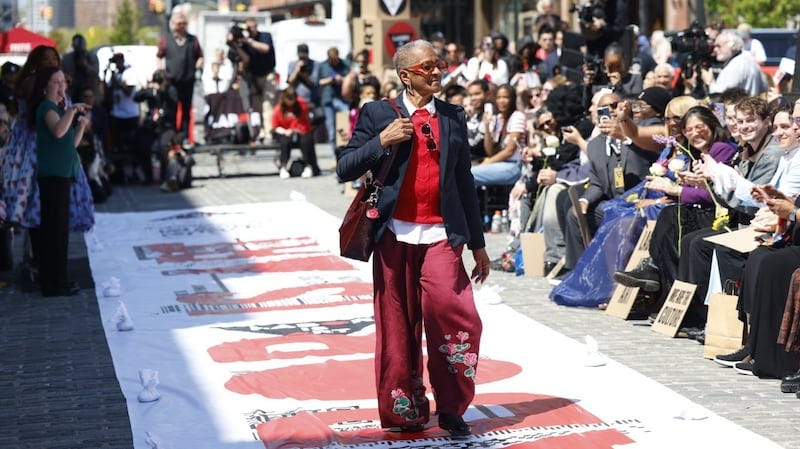
Instead of celebrities, the runway featured Amazon workers, union organizers, and people directly impacted by the systems being criticized. Instead of “Costume Art,” the message was clear: Labor is art, and that’s the part that actually felt real.
Ball Without Billionaires didn’t just critique the Met Gala; it replaced it, even if only for a day. It took the same idea of a runway, of spectacle, of storytelling through clothing, and stripped it of the gatekeeping. What you got instead was something closer to what culture actually looks like: messy, political, grounded in lived experience.
The people walking weren’t performing wealth; they were embodying resistance. Many of them had direct ties to the labor struggles being called out: Amazon workers organizing for safer conditions, employees pushing back against surveillance and union-busting, and people who have spent years fighting systems that treat them as disposable. When they walked, it wasn’t about being seen for status; it was about being seen at all.
And the crowd reflected that shift: instead of industry insiders and billionaires, it was organizers, creatives, and everyday New Yorkers who showed up not to network but to participate. The signs “Labor is Art,” “Tax the Rich” weren’t accessories; they were the thesis. The event didn’t pretend to be apolitical. It was explicitly about power: who has it, who creates value, and who gets erased from the narrative.
There was also something intentionally disruptive about placing this kind of event alongside the Met Gala. It forced a comparison that couldn’t be ignored. On one side of Manhattan, you had an institution celebrating “Costume Art” underwritten by extreme wealth. On the other hand, you had workers reclaiming the idea of art itself, arguing that the act of labor, of survival, of organizing, is its own form of creation.
And maybe most importantly, it didn’t feel polished in the way elite spaces do. It felt alive. There were imperfections, interruptions, moments that weren’t choreographed, and that’s exactly what gave it weight. Because real movements aren’t curated. They’re built in real time by people who don’t have the luxury of detachment.
That’s what made the Ball Without Billionaires land. It didn’t just say culture belongs to the people; it demonstrated it.
For the first time, Jeff Bezos sponsored the event, reportedly dropping $10 million for the privilege of shaping one of the world's most influential cultural nights. He and Lauren Sánchez Bezos were even named honorary chairs.
Ball Without Billionaires wasn’t the only event either; protesters gathered outside the Met holding signs that read “TAX THE RICH” and staging what they called a “Resistance Red Carpet.” World-renowned union organizer Chris Smalls was detained trying to get on the carpet in protest of Jeff Bezos.
Across New York, guerrilla-style ads had already started popping up in subway stations calling out Bezos’ role in everything from labor conditions to contracts with ICE.
The Met Gala wants you to believe culture is something that can be bought, curated, and controlled by the ultra-wealthy. That if you have enough money, you can sit at the top of the steps and decide what art is, who gets seen, and what stories matter.
But Monday night proved the opposite: while billionaires tried to purchase relevance inside, people were building something real outside, something grounded in labor, in resistance, and in the simple idea that culture doesn’t come from boardrooms. It comes from people.
And once you see that contrast, you can’t unsee it. This wasn’t just about one event, or one billionaire, or even one night in New York. It was a glimpse into a much bigger shift: a growing refusal to let wealth dictate everything—from our economy to our politics to our culture.
Because if culture truly belongs to the people, then no amount of money can buy it back.
That looks like Ms. Mary who was in the video about working at Amazon. So proud of these folks for taking their power back!