
In the past few days, both sides have escalated to targeting upstream gas facilities, the actual sites where energy is produced. That might sound technical, but the implications are massive: this isn’t just about military strategy anymore, it’s about destabilizing the global energy system.
And we are all going to pay the price.
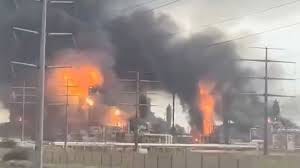
Earlier this week, an Iranian drone strike forced operations to halt at the Shah gas field in Abu Dhabi, a site responsible for roughly 20% of the UAE’s gas supply. Then came the larger escalation: a production facility at South Pars, the world’s largest gas field, shared between Iran and Qatar, was struck. South Pars isn’t just another energy site. It’s the backbone of Iran’s domestic energy system and a critical piece of global supply. South Pars produces more than 730 million cubic meters of gas per day.
Up until now, the US and Israel had largely avoided targeting this kind of infrastructure. Not because they couldn’t, but because they understood the consequences. Once you start hitting energy production, retaliation doesn’t stay contained; it spreads.
After the South Pars strike, Iran responded by explicitly naming oil and gas facilities across Saudi Arabia, the UAE, and Qatar as potential targets. In other words, the entire Gulf energy network is now on the table.
This is where the escalation becomes global: energy infrastructure in the Gulf doesn’t just power the region, it underpins the global economy. Disruptions here don’t stay local. They show up everywhere: gas prices, food costs, supply chains, inflation.
We’re already seeing the early signs:
Oil prices jumped immediately after the strike
Diesel in the US is climbing again
The worst part: this is irreversible and cannot be fixed immediately
After the 2003 invasion of Iraq, it took years for oil production to recover, despite billions of dollars and full access to facilities. More recently, Ukraine’s damaged energy grid has shown how slow and complex rebuilding can be amid conflict.
If major gas or liquefied natural gas facilities are destroyed, experts warn repairs could take years to fully restore capacity, and during that time, there is no easy replacement. What makes this even more dangerous is that energy in the Gulf isn’t just economic, it’s political.
Entire systems of governance in the region are built around energy wealth. It funds public services, stabilizes governments, and shapes relationships between countries. Even fragile diplomatic relationships, like the recent thaw between Iran and Saudi Arabia, are tied to energy interests.
South Pars itself has historically acted as a rare point of cooperation between Iran and Qatar, but now it’s a target.
This is how wars spiral, not all at once, but step by step, each escalation making the next one easier, each line crossed becoming the new normal. Targeting energy production doesn’t just raise the stakes; it redraws them entirely.
And the people who will feel it most won’t be the ones making these decisions.
Get that moron out of the White House!!!
Part of Project 2025, destroy the world economy. French Rev action called for. Maybe time to dox all members of regime involved.