

Israel has now struck a pharmaceutical facility in Tehran, and is claiming it was secretly tied to chemical weapons development. Sound familiar?
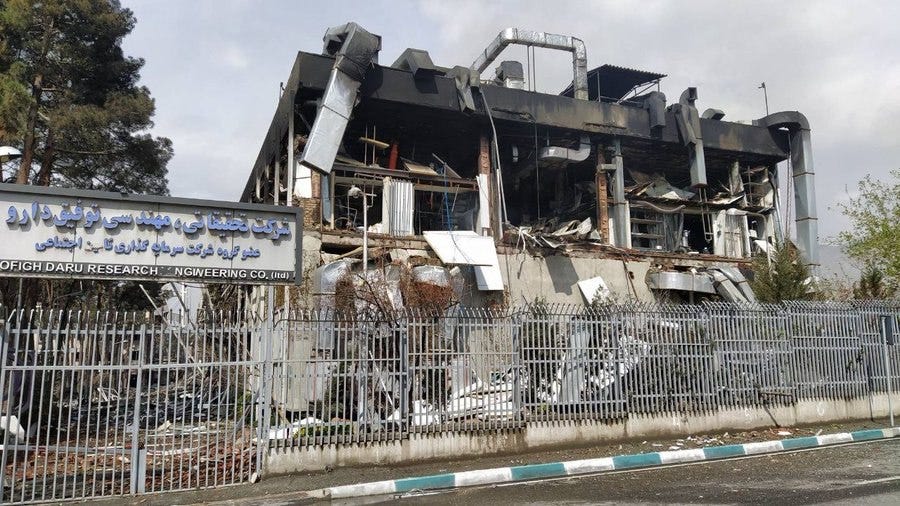
On Tuesday morning, Israeli missiles hit Tofigh Daru, a major Iranian pharmaceutical company based in Tehran. According to Iran’s state news agency, the strike completely destroyed raw material production units and research and development facilities.
This isn’t a minor site; this is a core part of Iran’s domestic medicine supply chain. Israel says the facility wasn’t just a civilian site. In a statement, the Israeli military claimed:
The company was a “front”
It was supplying materials, specifically fentanyl, to a military unit
That unit is allegedly tied to chemical weapons development
Their argument is essentially this: that this wasn’t a hospital supplier, it was part of a weapons pipeline. They are essentially using the same hasbara human shields type of argument for this bombing. The thing is, Iran is so heavily sanctioned as it is that a blow like this will have repercussions for decades to come. Medical supplies that are already hard to come by will become even harder to find. This is international genocide, by proxy of limiting access to life-saving medication and material.
Iran is calling this exactly what it looks like: an attack on civilian infrastructure. Iranian Foreign Minister Abbas Araghchi said Israel is
“openly and unashamedly bombing pharmaceutical companies.”
Meanwhile, Iran’s health officials say the facility produced critical raw materials for hospital medications, supplied drugs used in operating rooms, and contributed to cancer treatment production.
Due to years of U.S. sanctions, Iran cannot rely on imports of foreign pharmaceuticals. Which means domestic facilities like this aren’t optional, they’re essential.
Under international humanitarian law, this isn’t just about intent; it’s about proportionality. Even if a facility is considered “dual-use,” meaning it could serve both civilian and military purposes, that alone does not justify its destruction. Commanders are still legally required to weigh the expected military advantage against the potential harm to civilians.
That means you cannot simply level an entire site without considering the broader consequences. If the primary impact of an attack is civilian, especially when it involves essential infrastructure like pharmaceutical production, that matters more than any alleged secondary military use.
Experts are already pushing back on the justification. Economic analyst Esfandyar Batmanghelidj put it bluntly: if you destroy an entire pharmaceutical facility, the damage isn’t collateral, it’s primarily civilian. And if that’s the case, the legal and moral framing of the strike begins to unravel.
At a certain point, the question stops being what a facility might have been used for and becomes what its destruction actually does. When a country already cut off from global medical supply chains loses a major pharmaceutical hub, the consequences aren’t theoretical; they show up in hospitals, in operating rooms, and in patients who can’t get the treatment they need.
You can call it dual-use. You can call it military necessity. But if the primary outcome is the degradation of a civilian healthcare system, then the line between targeting infrastructure and targeting innocent civilian people becomes dangerously thin.
Netanyahu is a war criminal, just like Trump, just like Hegseth. THE HAGUE AWAITS.
Straight outta Gaza playbook ……cl USAaau pop pop