

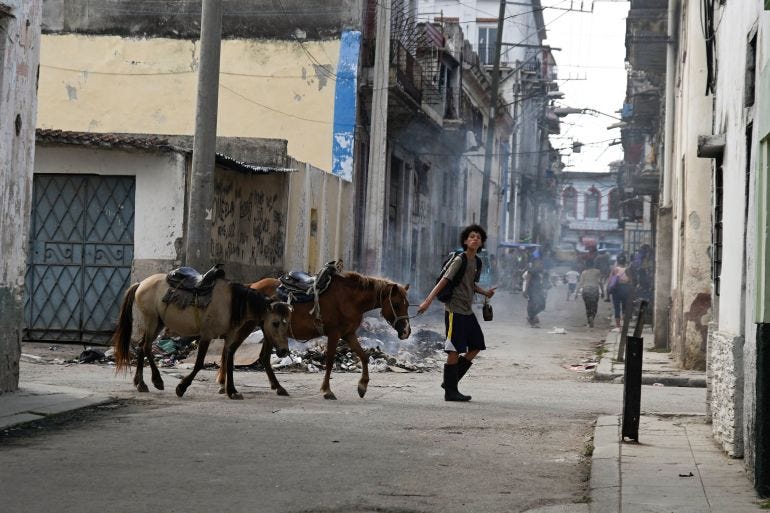
The state-run electrical operator confirmed the collapse and said emergency efforts are underway to restore power across the Caribbean island. But for millions of Cubans, the blackout is not just a temporary disruption; it is the latest escalation in a worsening energy crisis that has been unfolding for years.
In Havana and across the country, entire neighborhoods went dark. Hospitals, homes, public transit systems, and critical infrastructure were suddenly left without power.
For many Cubans, this moment had been coming.
Cuba’s electricity system is heavily dependent on oil-fired power plants. When the supply of oil dries up, the grid simply cannot function. Cuban officials say that is exactly what has happened. President Miguel Díaz-Canel said last week that no oil shipments had reached the island in three months, a situation he directly linked to tightened U.S. sanctions and restrictions on fuel shipments.
“The impact of the blockade is tremendous,” Díaz-Canel said. “It is most brutally manifested in these energy issues. This causes anguish among the population.” Without fuel, the grid cannot sustain itself. The result: rolling blackouts that eventually culminated in total collapse.
For ordinary Cubans, the blackout is more than an inconvenience. It is a humanitarian crisis unfolding in slow motion.
Across the island:
Hospitals have reduced services due to power shortages.
Public transportation has been cut back because there is not enough fuel.
Trash collection has slowed, leaving piles of garbage accumulating in neighborhoods.
Internet connectivity has collapsed, dropping to roughly one-third of normal traffic levels.
At night, Havana now sits in near total darkness. Residents say conversations on street corners revolve around a single question: when will the power come back on, and for how long? The economic consequences are equally severe. Fuel prices on the unofficial market have surged to as high as $9 per liter, meaning a car fill-up can cost over $300, more than many Cubans earn in an entire year.
Tourism, one of the country’s primary sources of foreign currency, is also being hit. Air Canada recently suspended flights to Cuba due to a shortage of aviation fuel on the island.
Cuban officials say U.S. sanctions restricting oil shipments are the main cause of the blackout, while critics argue Cuba’s aging power plants and decades of underinvestment also played a role. In reality, both factors have left the country’s fragile grid on the brink.
The crisis comes amid escalating rhetoric from U.S. President Donald Trump, who recently said Cuba is in “deep trouble” and suggested the U.S. could be involved in a “friendly takeover.” Cuban officials see the sanctions as an attempt to force political change through economic collapse.
Blackouts don’t just turn off lights; they shut down hospitals, refrigeration for medicines, transportation, and communications. Tonight, much of Havana sits in darkness, and millions of Cubans wait to see when power will return.
What’s happening in Cuba is not just an energy crisis; it’s a political one with very real human consequences. When an entire country loses electricity, the effects ripple through hospitals, food systems, communication networks, and daily life. Whether the cause is sanctions, infrastructure failures, or both, the people paying the price are ordinary Cubans. As the island sits in darkness, the bigger question remains: how much suffering will it take before the policies shaping this crisis are reconsidered?
America, continuing its Good Neighbor Policy. Yours in Christ, go in peace.
NOTICE TO CUBANS: that madman in DC parading around like a tin pot dictator sure as hell ain't my government head. No Mam, No Sir.