

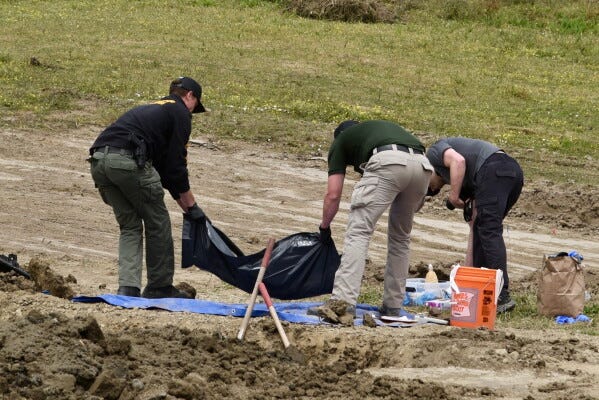
After executing a second search warrant this week, investigators say they recovered 117 intact dog remains, 21 canine skulls, and hundreds of additional bones buried across the property. Many of the dogs showed evidence consistent with gunshot wounds, according to preliminary forensic examinations conducted by USDA veterinarians.
Authorities used ground-penetrating radar before excavating multiple locations where disturbed soil suggested buried remains. Investigators also recovered several loose microchips that they are now attempting to match to individual dogs.
Even more disturbing, investigators say they discovered what they believe was an area inside a barn that may have been used to kill dogs, as more than 600 dog collars were also recovered from the property.
More than 700 dogs are still unaccounted for.
According to investigators, approximately 900 dogs were transferred to the rescue by shelters and private owners since January 2025 under agreements that the animals would be rehabilitated and adopted into new homes.
So far, authorities have located adoption records for only about 100 dogs, leaving more than 700 animals whose whereabouts remain unknown. Search warrant affidavits allege that the rescue accepted payments, sometimes hundreds or even thousands of dollars per dog, from shelters across California in exchange for taking the animals. Investigators are examining whether some dogs were allegedly killed instead of being rehomed to make room for additional animals.
The investigation first began after a neighboring resident admitted to entering the property earlier this year and uncovering several buried dogs with apparent gunshot wounds.
Despite the scale of the investigation, no criminal charges have been announced against the rescue’s owner or employees, but legal experts say that doesn’t necessarily mean charges aren’t coming.
Unlike crimes involving human victims, animal cruelty cases often depend heavily on forensic evidence because the victims cannot testify. Prosecutors must establish not only how the animals died, but whether those deaths violated California law.
California law does allow euthanasia under certain circumstances, meaning the presence of gunshot wounds alone is not automatically evidence of criminal animal cruelty. Investigators must determine whether the killings were lawful or whether the animals were intentionally subjected to unnecessary suffering or killed illegally.
Beyond animal cruelty, authorities are also investigating potential fraud, conspiracy, breach of contract, and nonprofit law violations tied to the rescue’s operations. The Humboldt County Sheriff’s Office says investigators still have a massive amount of evidence to review, including forensic reports, microchip data, financial records, and witness interviews, before deciding whether to submit criminal charges to prosecutors.
For now, one fact stands above the rest:
Hundreds of families and animal shelters entrusted these dogs to a rescue they believed would save them, and more than 700 of those dogs are still missing. My heart aches for everyone impacted; it's just a complete tragedy in every sense of the definition.
Evil
I'm starting to think that God is going to start all over again. I don't see any humanity anymore.