

Boeing was recently awarded a whopping $8.6 billion contract for the F-15 Israel Program to manufacture 25 F-15 fighter jets for Israel, with an option to produce an additional 25. The contract will cover the design, integration, installation, testing, production, and delivery of all aircraft. This contract’s performance is slated to run through December 31, 2025.
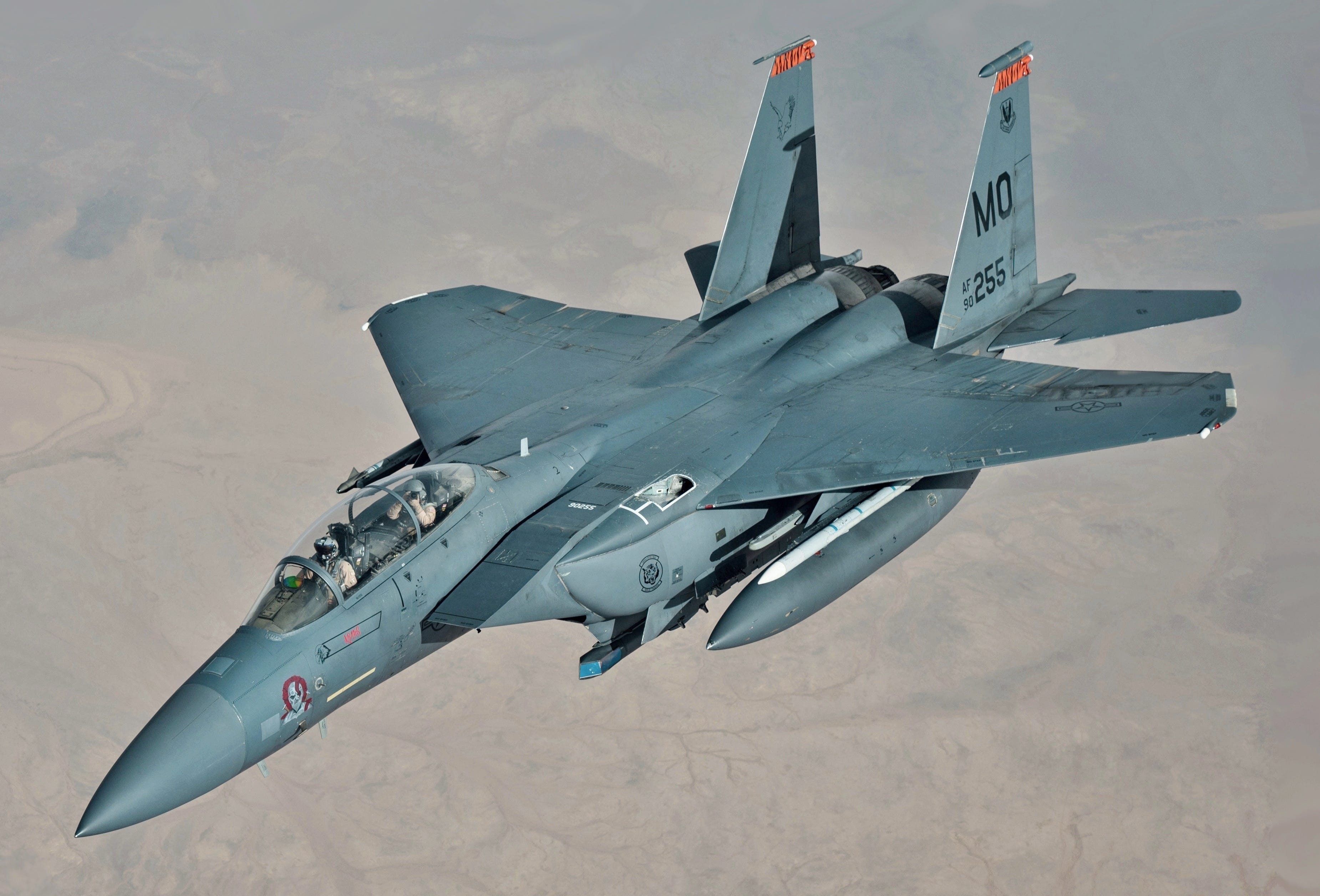
As a result, Boeing is planning to add a second assembly line in St. Louis for the F-15, according to the employee union, which represents about 3,300 Boeing employees in three defence plants in the St. Louis area.
This announcement was made after Donald Trump met with Benjamin Netanyahu earlier last week. The contract is in addition to the Biden administration's 2024 move towards $18 billion in weapons sales to Israel, which included 50 F-15 fighter jets manufactured by Boeing.
According to Defense News, the F-15IA will be a version of the F-15 models that Israel currently uses for their onslaught against Gaza and the other areas it chose to attack. The current models were developed for the Israeli Air Force in the 1990s and first entered service in 1998. This new version of the warplane will include longer-range attack capabilities, an increased armament-carrying capacity of up to 14 tons, and fly-by-wire guidance systems that enable high maneuverability.
To put this into a real-world context, the F-15 and F-15I were among the 140 fighter jets during the 12-day Israel-Iran war, which killed at least 1,100 Iranian civilians, including women and children.
Although this $8.58 billion contract isn’t a direct cash grant handed to Israel, it effectively guarantees that Boeing manufactures fighter jets for Israel using American taxpayer money. There’s really no softer way to say it. On paper, Israel “pays” the United States for the jets, but in reality, much of that money originates in Washington. Israel finances most major U.S. weapons purchases through Foreign Military Financing (FMF), a military aid program funded by Congress and paid for by U.S. taxpayers.
Each year, the U.S. provides Israel with roughly $3.3 billion in FMF, along with additional funding for missile defense. Israel then uses that U.S.-provided aid to purchase weapons through the Foreign Military Sales (FMS) system. The U.S. government collects the payment, and Boeing gets paid under the contract.
So while the money technically cycles back into an American company, it primarily benefits defense contractors and shareholders, not the American public. Unless you work at Boeing or own stock in it, this isn’t an investment that benefits everyday people. In plain terms: Congress allocates the funds, the U.S. gives them to Israel as military aid, Israel uses that aid to buy fighter jets, and Boeing profits. That’s why it’s accurate to say these jets are paid for with American taxpayer money.
Ultimately, this deal isn’t just about aircraft manufacturing or job creation; it’s about political priorities. At a moment when Americans are struggling with housing costs, healthcare access, and basic economic security, billions of taxpayer dollars are being routed through military aid to underwrite weapons that will be used in active conflicts abroad.
The $8.6 billion Boeing contract makes clear who this system is designed to serve: defense contractors, arms manufacturers, and political alliances, not the public footing the bill.
Whether framed as foreign aid, national security, or economic stimulus, the result is the same: American tax dollars are financing more warplanes, more destruction, and more profit for the defense industry, with little accountability and even less benefit for everyday people.
So they can kill innocent Palestinians
China holds a great deal of the Venezuelan National debt which was supposed to be paid back in oil shipments. How agreeable will the Chinese be now to give Trump 1 gram of critical minerals let alone tons to fulfil this order? The U.S. depends heavily on imports for many critical minerals - more than 75–95% of processing and supply comes from foreign sources (notably China).