

The Supreme Court just screwed the American people again in a major ruling that could reshape corporate accountability for pesticide manufacturers and make it far harder for Americans to sue over cancer warnings.
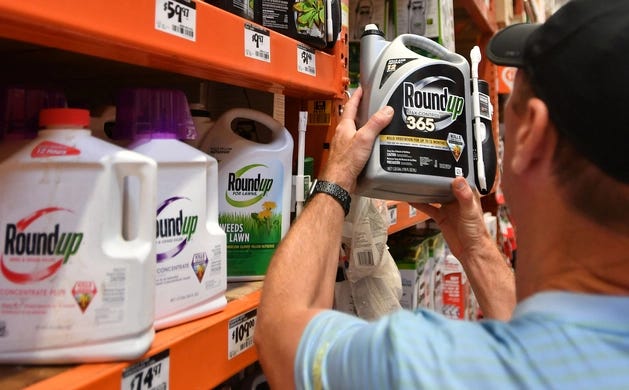
In a sweeping 7-2 decision, the U.S. Supreme Court ruled that Bayer, the manufacturer of Roundup weedkiller, cannot be sued under many state “failure-to-warn” laws because the federal government does not require the product to carry a cancer warning label.
The decision effectively closes the door on thousands of lawsuits brought by people who say years of exposure to Roundup caused them to develop non-Hodgkin’s lymphoma and other cancers. Legal experts say the ruling could also strengthen liability protections for other pesticide manufacturers facing similar claims.
For Bayer, it’s a massive legal victory; but for many families battling cancer, it’s the end of one of the few avenues they had to seek accountability.
The legal battle over Roundup
Roundup has spent years at the center of one of the largest product liability battles in American history.
After purchasing Monsanto in 2018, Bayer inherited hundreds of thousands of lawsuits alleging that prolonged exposure to Roundup’s active ingredient, glyphosate, contributed to cancer. Juries across the country awarded billions of dollars in damages in several high-profile cases after concluding the company failed to adequately warn consumers about potential risks.
Thursday’s ruling dramatically changes that landscape, as the court concluded that because the Environmental Protection Agency approved Roundup’s label without requiring a cancer warning, individual states cannot impose different warning requirements through lawsuits. In other words, federal labeling standards now preempt many state-law claims arguing consumers should have received stronger warnings.
Not every lawsuit against Bayer disappears; claims focused on product design or other legal theories may still proceed… but one of the primary legal strategies used by cancer patients has now been significantly narrowed.
The science remains deeply contested
The ruling does not settle the scientific debate over glyphosate. In 2015, the International Agency for Research on Cancer, part of the World Health Organization, classified glyphosate as “probably carcinogenic to humans.” That classification fueled years of litigation and public concern.
Meanwhile, the U.S. Environmental Protection Agency has repeatedly maintained that glyphosate is not likely to cause cancer when used according to label directions. Those conflicting conclusions have left consumers caught between competing scientific assessments, regulatory agencies, and courtroom testimony for more than a decade.
Bayer still faces billions in payouts
Despite today’s victory, Bayer has already committed enormous sums to resolving Roundup litigation. The company previously allocated roughly $16 billion toward settlements and recently proposed an additional multibillion-dollar class-action agreement designed to resolve many remaining claims.
Nearly 200,000 people have filed claims related to Roundup exposure over the years, and Bayer has also stopped selling glyphosate-based Roundup products for residential lawn and garden use in the United States, though glyphosate remains widely used in commercial agriculture.
A surprising divide inside Trump’s coalition
The decision also exposes growing tensions within the Trump administration’s political coalition. Many supporters of the “Make America Healthy Again” movement, including Health and Human Services Secretary Robert F. Kennedy Jr., have spent years criticizing glyphosate and arguing that pesticide exposure poses serious health risks. It’s one of those “a broken clock is right twice a day” situations.
At the same time, the administration has emphasized protecting agricultural production and maintaining access to herbicides that many farmers consider essential for food production. That conflict has produced an unusual political split: agricultural groups applauded the Court’s decision as necessary for food security, while environmental advocates and many MAHA supporters condemned it as a major setback for public health.
Beyond Roundup itself, the decision could reshape how corporations are held accountable when federal regulators approve product labels. If companies can rely on federal approval as a shield against many state warning lawsuits, critics argue consumers may have fewer opportunities to seek compensation when new evidence about health risks emerges years later (Which I agree with).
The Supreme Court's decision may bring legal certainty for corporations, but it leaves many Americans with fewer options when they believe they've been harmed. As scientific research continues to evolve, federal approval should not become a permanent shield against accountability, especially when lives and public health are at stake. Consumers deserve transparency about potential risks, and companies should be held responsible for providing meaningful warnings when credible evidence raises concerns. When access to the courts is narrowed, so too is one of the public's most powerful tools for seeking justice.
Wish I was surprised, but I live in America, so people getting screwed over by big corps and enabled by the government is nothing new 😕 😢 🙄😒
With regard to the current administration and its hand-picked/stacked Supreme Cart (intentional distortion), and its axing of so many rules, regulations, and systems intended and created and protect our lives from danger, disease, and destruction, I propose an alternate version of Rhymin' Simon's 'There must be 50 ways..." song.
The title will be "There must be 50 ways to increase death rates".