

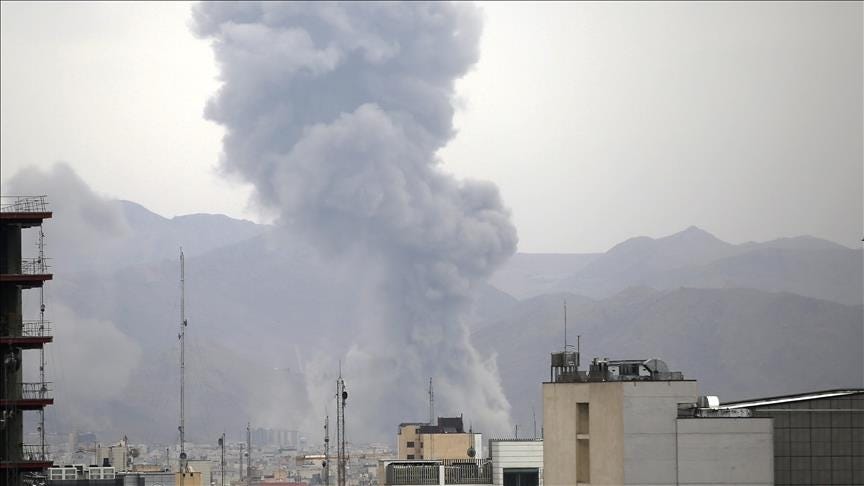
Just weeks after the United States and Iran agreed to a temporary ceasefire, President Donald Trump announced that, “as far as I’m concerned, it’s over,” and hours later, the U.S. military launched another wave of strikes inside Iran.
According to U.S. Central Command (CENTCOM), the strikes were carried out in retaliation for Iranian attacks on commercial vessels in the Strait of Hormuz. Iranian officials, however, argue the United States violated the ceasefire first by challenging the agreement governing security in the strategic waterway. Whatever version of events ultimately proves correct, one fact is undeniable: diplomacy is rapidly being replaced by military escalation.
Throughout the day, Trump repeatedly signaled that more strikes were coming; while speaking at the NATO summit, he dismissed ongoing negotiations as “a waste of time,” referred to Iranian leaders with inflammatory language, and suggested additional military action was likely.
Soon afterward, explosions were reported across multiple Iranian cities, including Bushehr, Bandar Abbas, Chabahar, and Konarak. Bushehr is particularly significant, as it is home to Iran’s only civilian nuclear power plant and is located near Kharg Island, through which the overwhelming majority of Iran’s oil exports pass.
Much of this latest escalation centers on the Strait of Hormuz, a narrow stretch of water connecting the Persian Gulf to the rest of the world, through which nearly one-fifth of the world’s traded oil passes.
When conflict erupts there, the consequences are felt everywhere: oil prices surged almost immediately following Trump’s remarks, while stock markets fell amid fears that a prolonged conflict could disrupt global energy supplies and destabilize the broader economy.
We’ve Seen This Before
For decades, Americans have been told that military force will bring stability to the Middle East, but instead, we’ve witnessed generations shaped by invasion, sanctions, proxy wars, displacement, and unimaginable human suffering.
The United States has spent trillions of dollars on war while millions of Americans struggle to afford healthcare, housing, education, and food. Meanwhile, families across the Middle East continue to pay with their homes, their livelihoods, and, far too often, their lives.
What Comes Next?
Diplomatic efforts now appear increasingly uncertain, although some negotiations technically remain open; Trump’s public declaration that the ceasefire is effectively “over” has significantly undermined confidence that the current agreement can survive.
With both governments hardening their positions, global markets reacting nervously, and military operations continuing, the risk of miscalculation grows with every passing day.
History has repeatedly shown that wars rarely stay confined to the plans of political leaders, and once escalation begins, the human cost is almost always paid by ordinary people.
Whether diplomacy can still prevent a wider regional conflict remains one of the most urgent questions facing the international community. My best guess? Trump cannot afford this, and he will feel the wrath of his war escalations when he loses the House and Senate in the midterms. As my heart bleeds for my country and family who still live in Iran, I pray that the senseless bombing ends and my people can live in peace, without the fear of bombs dropping over their heads every night.
We're at the mercy of a tantrumming fiver y.o.
It's been over for a couple weeks now and really never started to begin with