

To put it simply: the deal will redirect Venezuelan oil exports from China to the US, with a volume of 30-50 million barrels. Chevron is the only US company authorized to export Venezuelan oil. This agreement is proof that Trump’s bullying actually worked, with the Venezuelan government responding to Trump’s demand that they open up to US oil companies or risk more military attacks.
Washington has reportedly “reached a deal” with Caracas to export up to $2 billion worth of Venezuelan crude to the US. Trump also said that he wants the interim President Delcy Rodriguez to give the US and private companies “total access” to Venezuela’s oil industry, and at this rate, I wouldn’t be surprised if they give it to him with no questions asked.
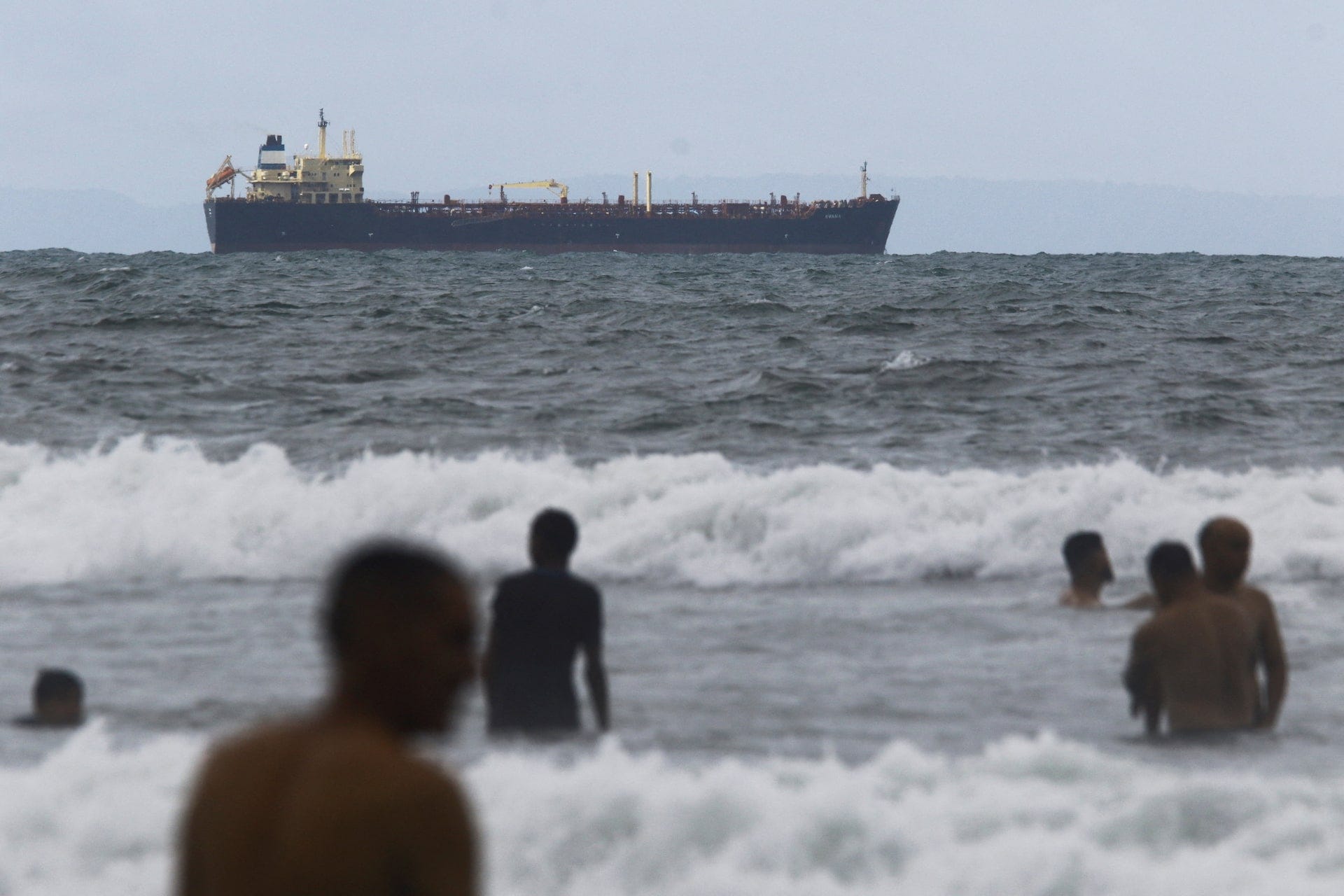
Due to a blockade imposed by Trump in mid-December, millions of Venezuelan oil barrels have been loaded in tankers and storage tanks, unable to ship.
China has been Venezuela’s #1 buyer of oil in the last decade, and this was exacerbated once the US imposed sanctions on companies involved in oil trade with Venezuela in 2020.
Now, both Venezuelan and US officials have discussed possibly selling the carrels, with actions that allow US buyers to purchase cargoes and issue them the appropriate license to do so. In the past, Chevron, India's Reliance (RELI.NS), China National Petroleum Corporation (CNPC), European Eni (ENI.MI), and Repsol (REP.MC) sought access to Venezuelan oil to refine or resell to third parties.
This deal makes one thing clear: U.S. policy toward Venezuela was never about democracy, human rights, or restoring stability; it was always about oil.
Sanctions, blockades, and threats of military escalation were not meant to isolate Venezuela indefinitely, but to weaken it enough to force open its most valuable resource to American control. The moment access became possible, the moral justifications quietly disappeared.
By redirecting Venezuelan oil away from China and back into U.S. hands, Washington has effectively achieved what years of economic warfare were designed to accomplish.
This agreement doesn’t represent a shift in principle; it confirms the principle itself: when resources are on the table, pressure becomes policy, and sovereignty becomes negotiable.
Excellent breakdown. The $2 billion oil deal proves exactly what the November NSS documented: This was never about narcoterrorism, democracy, or Maduro being a dictator. It was always about redirecting Venezuelan oil from China to U.S. companies. The doctrine explicitly calls for denying “non-Hemispheric competitors” access to “strategically vital assets.” Mission accomplished.
But here’s the profoundly stupid part: The United States is already the world’s largest oil producer. We produce roughly 13 million barrels per day. We don’t need Venezuelan oil for energy security. We’re a net exporter.
So what did Trump just purchase for $2 billion in heavy crude? He killed 80+ people, shredded constitutional war powers, destroyed NATO alliances, validated sphere-of-influence politics for China and Russia, and destabilized an entire hemisphere. For 30-50 million barrels of heavy crude that’s expensive and environmentally catastrophic to refine. Oil we could have simply purchased on the open market. Access we already had through Chevron.
Maduro literally offered oil contracts on January 2nd. Trump bombed Caracas on January 3rd, then negotiated the same deal days later with a terrified government. We got the oil without the bombing. The violence was pure performance to prove the NSS playbook works for replication across the hemisphere.
The economic insanity: Venezuela’s heavy crude requires specialized refining infrastructure most U.S. refineries aren’t optimized for. It’s sulfur-heavy, requires more processing, costs more to refine than the light sweet crude we already produce domestically in massive quantities. From pure energy economics, this makes zero sense.
This was never about smart resource acquisition. The $2 billion in oil is the excuse. The real prize was demonstrating Trump can bomb capitals, extract leaders, and face zero institutional pushback so Cuba, Mexico, Colombia, Greenland all know what compliance costs.
The NSS codified this as doctrine. Venezuela proved it works operationally.
The ramifications compound: Every Latin American government now hedges against U.S. partnership. China and Russia learned sphere-of-influence politics work if you’re brazen enough. NATO allies watched us violate every principle we demanded they uphold. Domestic precedent set that presidents can wage war without Congress. The occupation costs and insurgency risks haven’t even started.
We traded international legitimacy, constitutional governance, and the entire post-WWII rules-based order for oil we already produce in greater quantities domestically. That’s not “America First.” That’s imperial overreach speedrunning its own collapse while the world’s largest oil producer pretends it needs Venezuela’s difficult-to-refine heavy crude for a demonstration effect that will ultimately isolate us.
—Johan
Former Foreign Service Officer
Have you read Paul Krugman’s piece today about the viability of Venezuela’s “thick” oil? I was able to corroborate his points and facts about the oil. The oil may not be the boon Trump thinks it is, or he knows all this and we just don’t fully realize what his agenda is at this point.