

For months, federal officials told the public a familiar story: an immigration operation turned violent because an undocumented immigrant attacked law enforcement, but now that the narrative is collapsing.
But this week, an ICE agent was charged with four counts of second-degree assault with a deadly weapon and one count of falsely reporting a crime after authorities say he shot a Venezuelan immigrant during a January operation in Minneapolis, and then helped spread a version of events that investigators say never happened.
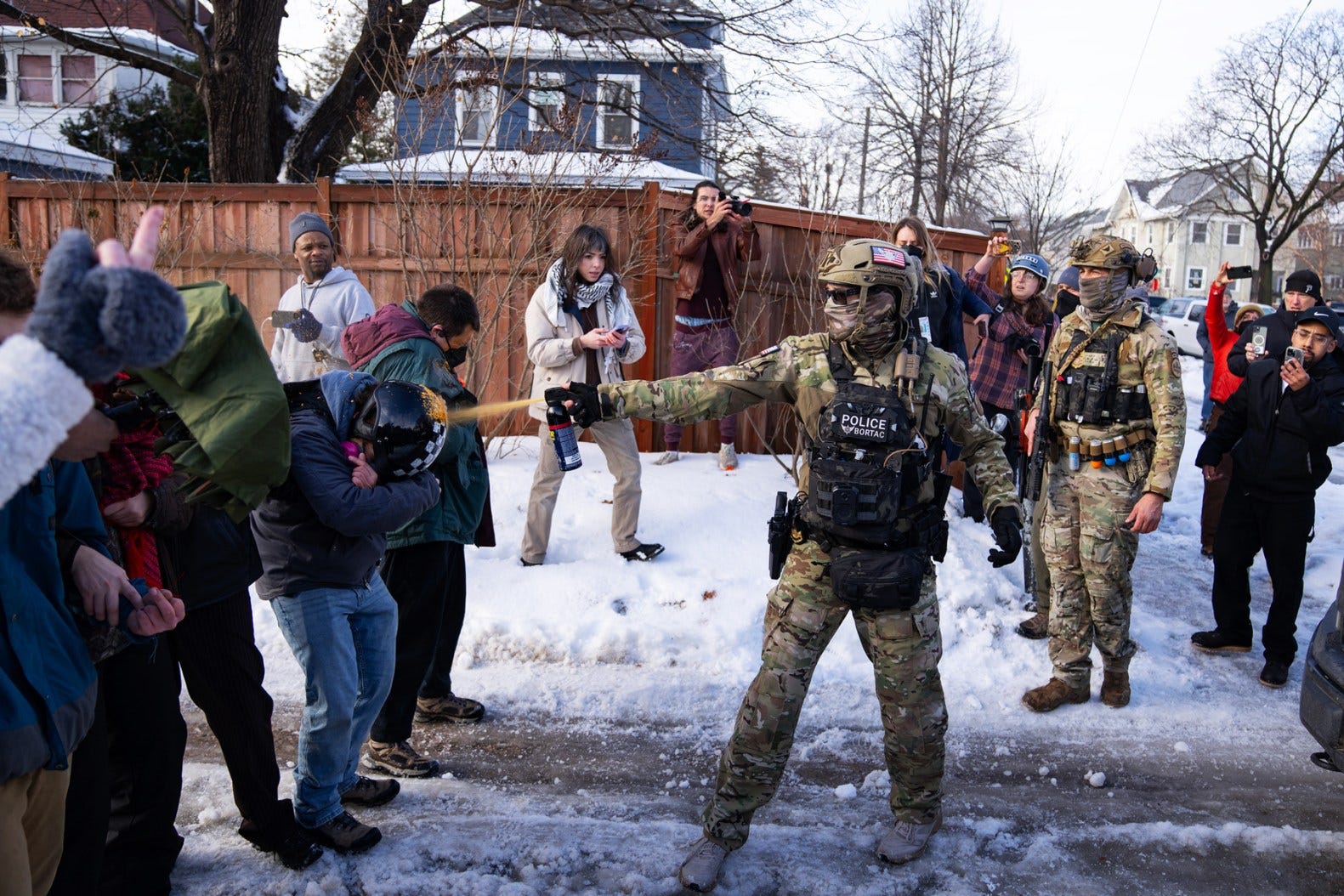
The charges stem from a January 14 ICE operation known as “Operation Metro Surge,” part of the Trump administration’s immigration crackdown in Minnesota. During that operation, Venezuelan immigrant Julio Sosa-Celis was shot by an ICE agent later identified as Christian J. Castro.
Immediately after the shooting, federal officials painted a dramatic picture. Sosa-Celis and his roommate, Alfredo Alejandro Aljorna, were accused of assaulting a federal officer. Their mugshots were circulated online. Then-Homeland Security Secretary Kristi Noem publicly escalated the claims, alleging “attempted murder.”
The Department of Homeland Security claimed an ICE agent had feared for his life after being violently attacked and beaten with a shovel. According to the government’s account, the officer fired a defensive shot while on the ground, but investigators say video evidence showed something entirely different.
Instead of being pinned down and attacked, Castro was allegedly standing outside the apartment and fired through a closed door. Investigators say the supposed shovel assault never happened. After an FBI agent testified that the official account given by Castro and DHS conflicted with the evidence, the criminal charges against Sosa-Celis and Aljorna were dropped. Castro and several agents involved in the operation were placed on administrative leave.
And this may be part of a larger pattern, just last month, another ICE agent in Hennepin County was charged with felony assault after allegedly pointing a weapon at drivers during immigration operations.
Yet despite mounting scrutiny, some of the most serious incidents connected to the operation still remain unresolved. Local prosecutors say investigations into additional deaths tied to ICE activity have been slowed by an extraordinary obstacle: federal agencies allegedly refusing to cooperate.
Minnesota prosecutors have now sued the federal government, arguing they cannot properly investigate because officials have refused to provide even basic information, including, according to prosecutors, the identities of people involved. That’s where this story becomes bigger than one shooting.
When law enforcement agencies release dramatic allegations before the evidence is public, those narratives can spread instantly. Mugshots circulate, headlines harden, and public opinion forms.
The problem is that accusations often travel much faster than corrections by the time evidence emerges, mugshots have already circulated, headlines have already been written, and millions of people have already absorbed a version of events that may not be true.
Because once an official narrative is released, it carries the weight of government authority. People assume facts have already been verified, but this case raises a larger question: how many stories become accepted as truth before the public ever sees the footage, the records, or the evidence?
When those stories fall apart, the damage rarely disappears with them. The charges get dropped. The narrative changes, but public memory often doesn’t. That’s what makes this bigger than Minneapolis... it’s not just about one shooting. It’s about who gets to tell the story first, and what happens when that story turns out to be wrong.
Sentence them to life in prison
Thank you for keeping us aware 🙏🙏🙏..!!